When discussing EMI shielding materials, electrical conductivity often receives most of the attention. However, the future of high-performance shielding may depend just as much on how materials manage electromagnetic waves within their internal architecture.
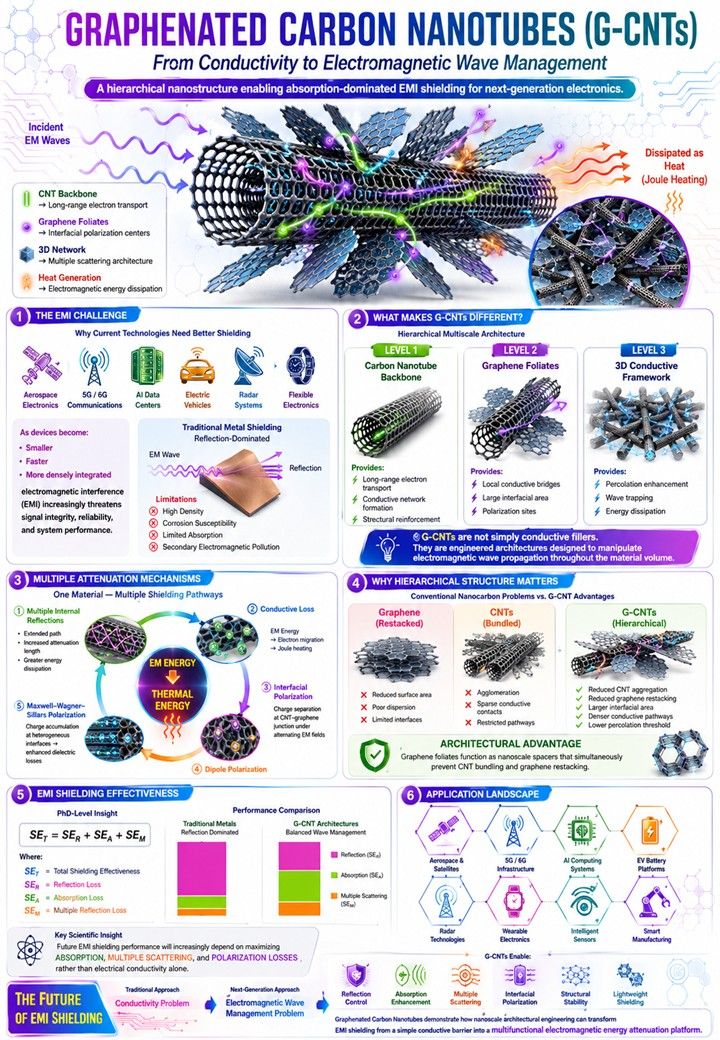
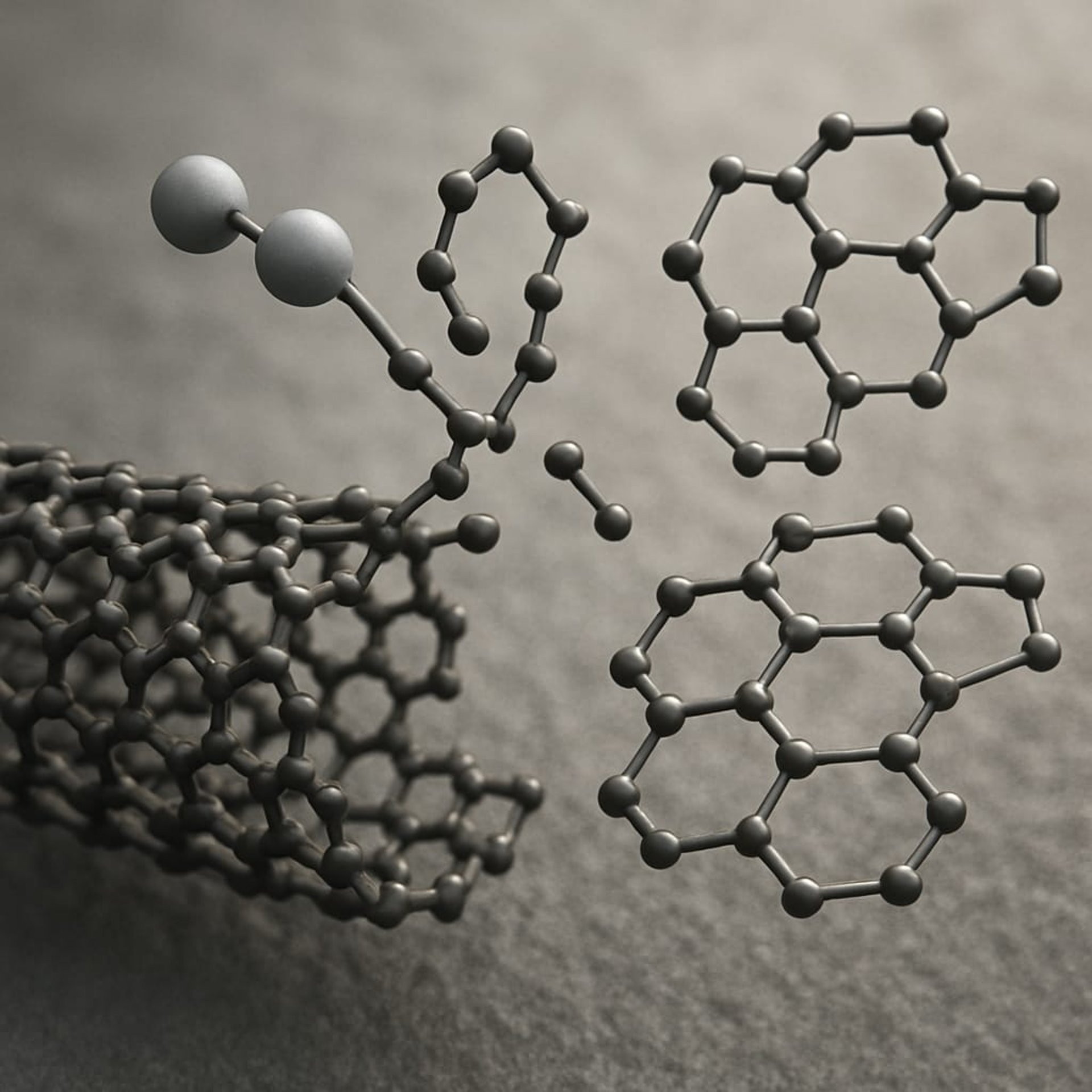
Graphenated Carbon Nanotubes (g-CNTs) combine the long-range conductivity of carbon nanotubes with graphene foliates grown directly from their sidewalls, creating a hierarchical 3D network capable of:
✅ Multiple internal reflections and scattering
✅ Enhanced conductive and dielectric losses
✅ Interfacial and Maxwell–Wagner–Sillars polarization
✅ Reduced CNT bundling and graphene restacking
✅ Lower percolation thresholds
Rather than functioning solely as conductive fillers, g-CNTs act as engineered electromagnetic attenuation platforms that convert incident electromagnetic energy into heat through multiple synergistic mechanisms.
This architecture is particularly attractive for next-generation applications including AI computing hardware, 5G/6G communications, aerospace electronics, electric vehicles, radar systems, and wearable technologies.
As electronic systems become increasingly compact and powerful, EMI shielding design may shift from a conductivity-driven paradigm toward a wave-management paradigm.
This infographic below summarizes the key mechanisms that make g-CNTs a promising candidate for absorption-dominated EMI shielding.