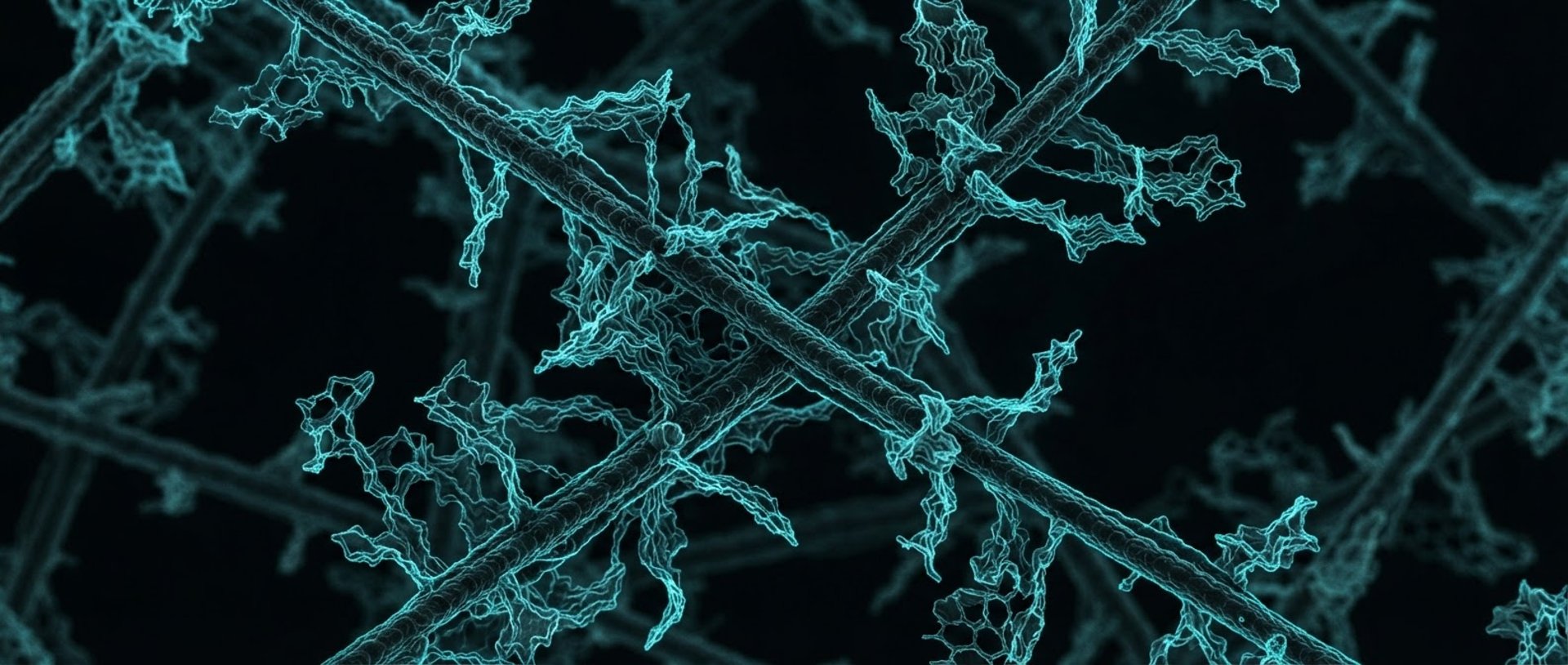
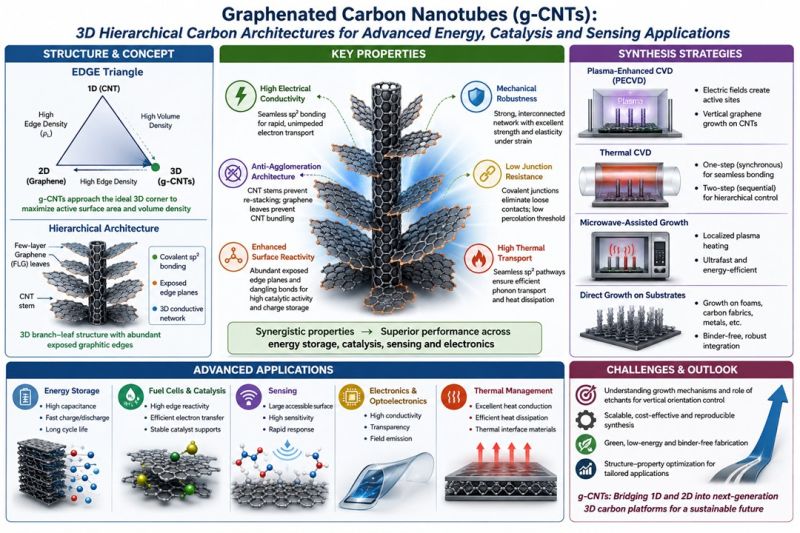
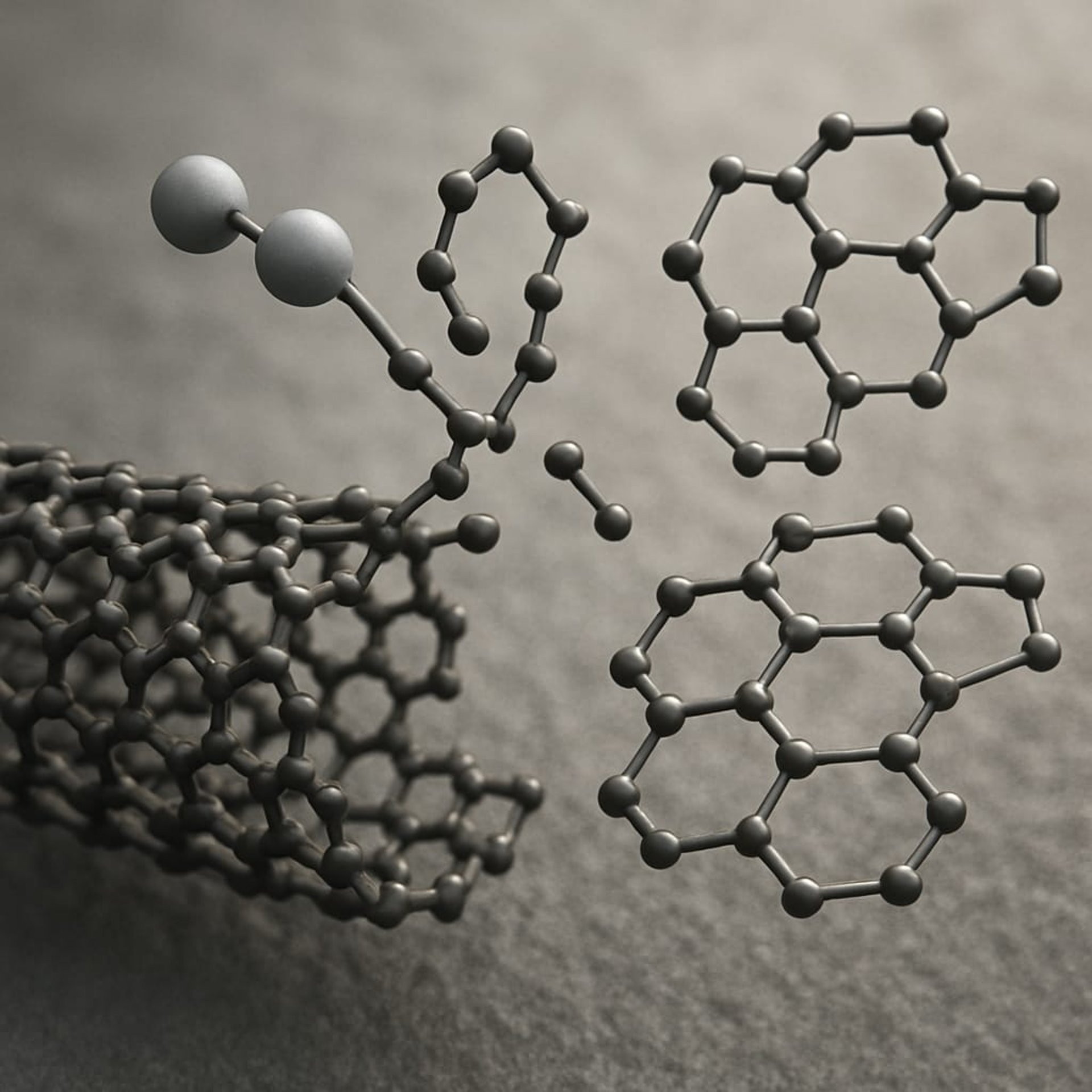
We present key insights into one of the most compelling structural evolutions in carbon nanomaterials: graphenated carbon nanotubes (g-CNTs). For years, the materials science community has navigated the unique advantages and inherent limitations of 1D carbon nanotubes and 2D graphene. By fusing these two dimensionalities, g-CNTs form a true 3D hierarchical architecture comprising a central nanotube "stem" covalently bonded to few-layer graphene "leaves." This configuration affords an unprecedented combination of high edge density and high volume density, approaching the theoretical limits for active carbon surfaces.
What makes this architecture so compelling is its natural resolution of the agglomeration issues that typically plague traditional nanocarbons. Our investigation reveals that the rigid CNT stems actively prevent the graphene leaves from restacking, while the protruding graphene foliage creates steric hindrance that inhibits nanotube bundling. This synergistic anti-agglomeration mechanism, coupled with seamless sp² covalent junctions, drastically lowers percolation thresholds and internal resistance. The result is a mechanically robust, interconnected network that sustains rapid, unimpeded electron and phonon transport.
We foresee tremendous potential for g-CNTs to drive next-generation advancements across multiple high-demand sectors. The abundant exposed edge planes translate to exceptional surface reactivity, positioning these 3D platforms as highly promising candidates for high-capacitance energy storage, stable catalyst supports in fuel cells, and ultra-sensitive sensors. While future efforts must focus on refining scalable, cost-effective synthesis strategies, such as plasma-enhanced CVD or microwave-assisted growth, the structural optimization of g-CNTs represents a vital engineering leap toward bridging 1D and 2D carbon platforms for a sustainable future.